
Train Every Way!
A smart fitness routine should help the body move better, work harder, recover well, and stay strong for the long run. Yoga, CrossFit, and weightlifting each solve a different part of that puzzle. One teaches control and mobility. One builds broad conditioning under pressure. One develops clear, measurable strength. The best choice is not always one lane. For many people, the real answer is learning how these styles fit together. This guide reflects established exercise science and public...
A smart fitness routine should help the body move better, work harder, recover well, and stay strong for the long run. Yoga, CrossFit, and weightlifting each solve a different part of that puzzle. One teaches control and mobility. One builds broad conditioning under pressure. One develops clear, measurable strength.
The best choice is not always one lane. For many people, the real answer is learning how these styles fit together.
This guide reflects established exercise science and public health recommendations reviewed through September 17, 2026, including the well-supported idea that a balanced routine should include strength work, aerobic conditioning, mobility, and recovery. It is informational only, not medical advice. Anyone returning from injury, managing a health condition, or starting after a long break should get guidance from a qualified professional.
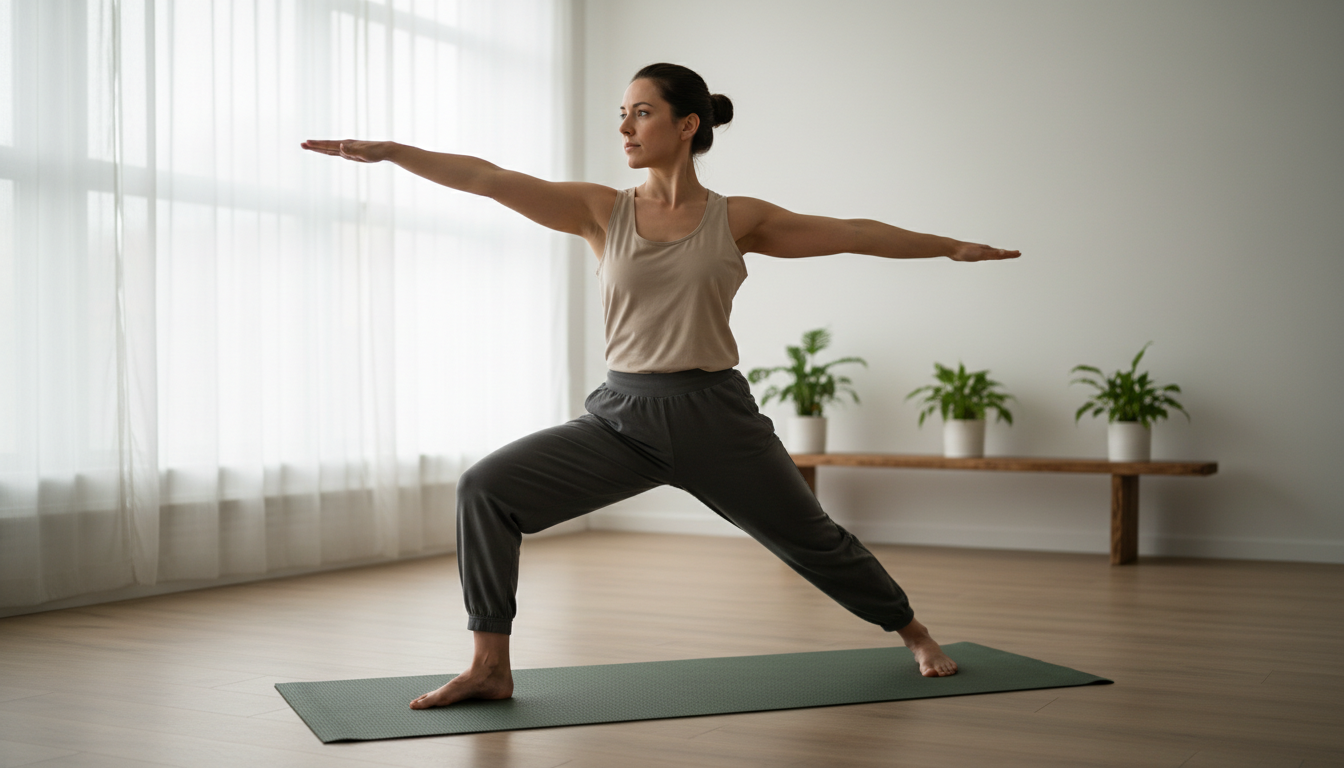
Yoga builds control from the inside out
Yoga is often described as stretching, but that sells it short. A good yoga practice trains breathing, balance, joint control, body awareness, and patience. It can be gentle, athletic, restorative, or demanding, depending on the style and class structure.
Yoga is especially useful because it improves the quality of movement. It asks the body to find position, hold tension where needed, release tension where possible, and stay steady while breathing. That skill carries into lifting, running, sports, daily life, and recovery.
Three major benefits stand out.
Mobility that supports better movement Yoga moves joints through controlled ranges of motion. That can help stiff hips, shoulders, ankles, and spines feel less restricted. Better mobility does not just mean deeper poses. It can mean a cleaner squat, a more comfortable overhead position, and fewer compensations during training.
Breath control and nervous system regulation Breath is central to yoga. Slow, controlled breathing can help the body shift out of a high-stress state. That matters for recovery, focus, sleep routines, and workout readiness. A person who can breathe well under mild discomfort often handles training stress with more control.
Balance, coordination, and body awareness Yoga teaches people where their body is in space. Standing poses, transitions, and holds challenge small stabilizing muscles that heavier workouts may miss. That awareness helps with everything from bracing before a lift to landing well during a jump.
Yoga’s biggest gift may be attention. It slows training down enough to reveal habits. Maybe one hip rotates differently. Maybe breathing gets shallow under stress. Maybe the shoulders work too hard because the ribs or upper back are stiff. Those findings can guide smarter training elsewhere.
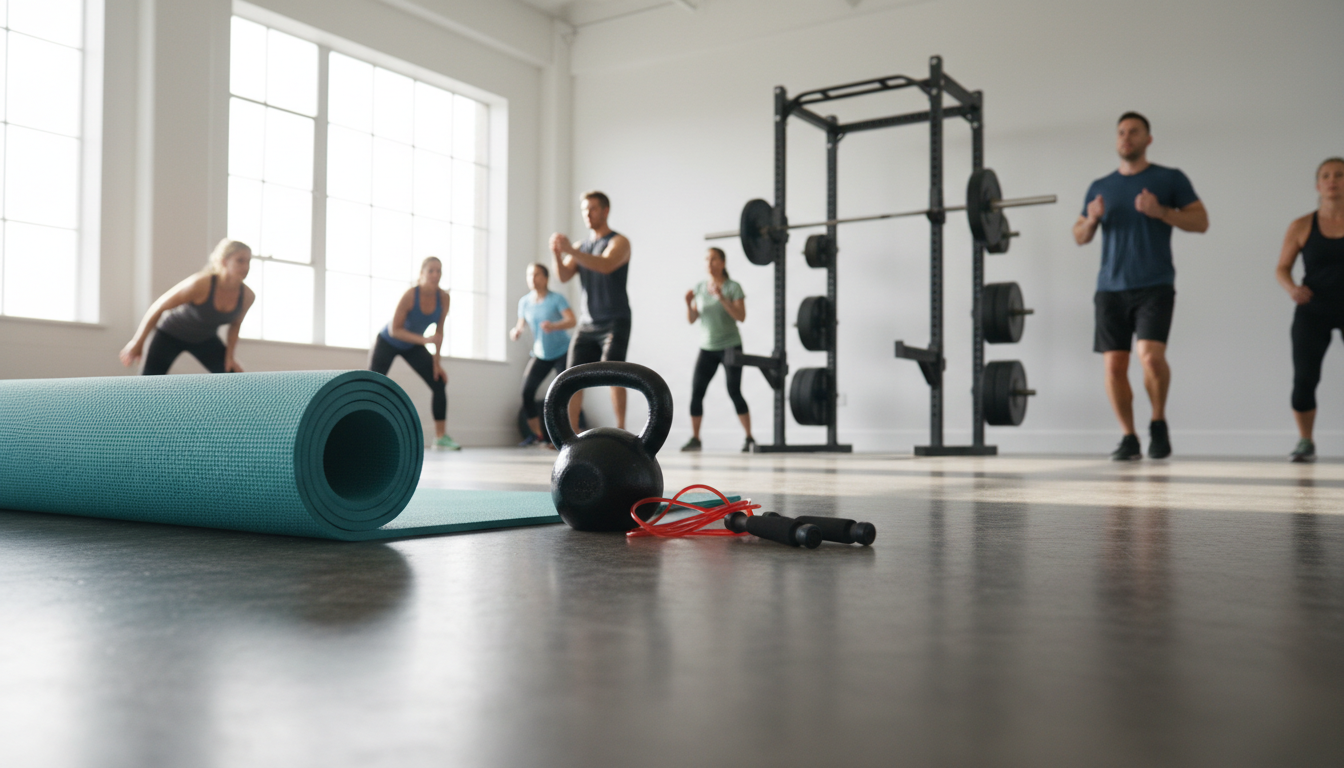
CrossFit trains capacity across many demands
CrossFit combines strength work, gymnastics-style movements, conditioning, and high-effort workouts. A class might include rowing, pull-ups, squats, rope climbs, kettlebell swings, burpees, box jumps, or Olympic lifting variations. The format changes often, which keeps the body adapting.
The draw is clear. CrossFit builds broad fitness. It does not train only one quality. It challenges endurance, power, strength, coordination, agility, and mental grit. The workouts can be scaled, which means the same session can serve a newer athlete and an experienced one through different loads, reps, or movement options.
Three major benefits make CrossFit stand out.
Conditioning that feels practical CrossFit often mixes strength and cardio in the same session. That teaches the body to keep moving while tired. Carrying groceries, hiking uphill, playing a sport, chasing a child, or climbing stairs all require this kind of mixed capacity.
Skill development across many patterns Squat, hinge, push, pull, carry, jump, climb, and rotate. CrossFit brings many patterns into one training week. This variety can expose weaknesses and build confidence in movements that do not show up in traditional machine-based workouts.
Community and intensity with structure The class setting can help people train harder than they would alone. Timed workouts, shared effort, coaching cues, and group energy create accountability. For many, that structure keeps fitness consistent.
CrossFit works best when intensity matches skill. Fast reps with poor control can create problems, especially with complex lifts or high-volume gymnastics movements. Good coaching, smart scaling, and honest pacing matter. A strong CrossFit routine should include warm-ups, technique practice, strength progressions, conditioning, and recovery, not just hard workouts stacked on hard workouts.
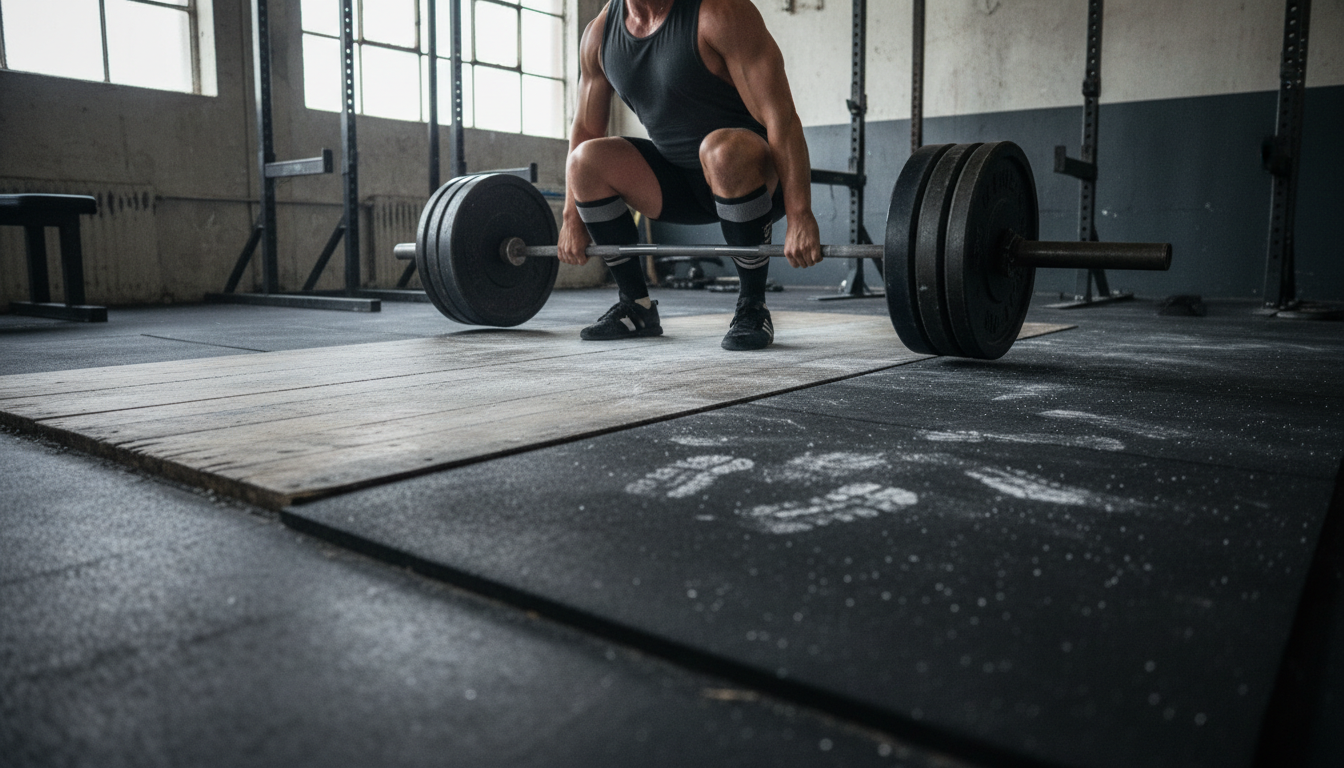
Weightlifting builds measurable strength and power
Weightlifting can mean different things. Some use the word for general strength training with barbells, dumbbells, kettlebells, and machines. Others use it for Olympic weightlifting, the snatch and clean and jerk. In this comparison, weightlifting refers to structured resistance training, with special respect for barbell strength and power work.
Weightlifting is beautifully clear. Add weight, improve form, increase reps, slow the tempo, or expand range of motion. Progress can be measured. That makes it one of the most reliable ways to build strength, muscle, bone-loading capacity, and confidence.
Three major benefits are especially important.
Strength that supports daily life Squats, deadlifts, presses, rows, lunges, and carries build the ability to produce force. That helps with lifting bags, getting up from the floor, moving furniture, climbing stairs, and staying capable with age.
Muscle and bone support Resistance training gives muscles, tendons, ligaments, and bones a reason to adapt. Research and public health guidance have long supported strength training as a core part of adult fitness. It matters for performance, injury risk reduction, metabolic health, and healthy aging.
Progress that is easy to track A logbook tells the truth. If a person squats more weight with good form, performs more controlled push-ups, or carries heavier loads for the same distance, strength has improved. That feedback keeps training grounded.
Weightlifting also teaches patience. Good lifting rewards setup, breathing, bracing, and repetition. The slower pace can balance the speed and fatigue of conditioning work. A strong deadlift or press is not only about muscle. It is about timing, tension, posture, and confidence under load.
The three styles solve different fitness problems
Yoga, CrossFit, and weightlifting overlap, but they do not replace one another perfectly. Each has a main strength.
Workout styleBest at buildingCommon blind spotYogaMobility, breath control, balance, body awarenessMay not provide enough progressive strength or intense conditioning on its ownCrossFitBroad conditioning, work capacity, mixed skills, training consistencyCan become too intense without enough recovery or movement qualityWeightliftingStrength, power, muscle, measurable progressMay miss mobility, breathing, and energy system variety if done alone
The most complete routine borrows from all three.
Yoga improves the positions needed for lifting and CrossFit. Better ankle mobility can help squats. Better shoulder control can help presses, overhead squats, handstands, and pulling work. Breath control can help during heavy sets and during hard conditioning pieces.
Weightlifting gives CrossFit a stronger base. A person who builds strict strength often moves more efficiently during workouts. Strong legs make wall balls and box step-ups easier. A stronger back helps rowing, deadlifts, cleans, carries, and pull-ups. Strong shoulders support presses and gymnastic progressions.
CrossFit gives yoga and lifting a conditioning challenge. A lifter may be strong but out of breath after a few minutes of mixed work. A yoga practitioner may have mobility and control but need more power and stamina. CrossFit fills that gap by asking the body to apply strength and coordination while heart rate rises.
Together, the three create a fuller picture of movement.
Why a blended routine works better than choosing only one
A single-discipline routine can work, especially when it matches a clear goal. Someone training for a powerlifting meet needs focused lifting. Someone preparing for a yoga workshop needs consistent practice. Someone competing in CrossFit needs sport-specific training.
For general fitness, blending styles often leads to better results and fewer gaps.
A movement-first approach values strength, mobility, endurance, coordination, recovery, and confidence. That aligns with the idea that fitness should improve how people live, not just how they perform inside a gym. The goal is a body that can lift, bend, breathe, carry, sprint, slow down, and recover.
Here is why the mix matters.
It spreads stress across the body.
Repeating the same training stress too often can overload certain tissues. Lifting heavy every day may wear down joints and nervous system readiness. Intense conditioning every day may leave the body under-recovered. Stretching without strength may create range without enough control. Rotating styles gives the body different signals.
It builds both capacity and quality.
CrossFit builds the ability to do work. Weightlifting builds the force behind that work. Yoga improves the quality and control of movement. One is not more “functional” than the others. Function comes from the combination.
It supports long-term consistency.
Training feels better when it has rhythm. Some days should challenge. Some should build. Some should restore. Having three styles available gives more options, which can reduce boredom and help manage fatigue.
A simple weekly way to combine all three
A balanced week does not need to be complicated. The right mix depends on goals, training history, recovery, schedule, and coaching. Still, a simple template helps.
For general fitness, try this structure:
Two days of weightlifting or strength training
Two days of CrossFit-style conditioning or mixed training
Two to three shorter yoga or mobility sessions
One full rest day or very light recovery day
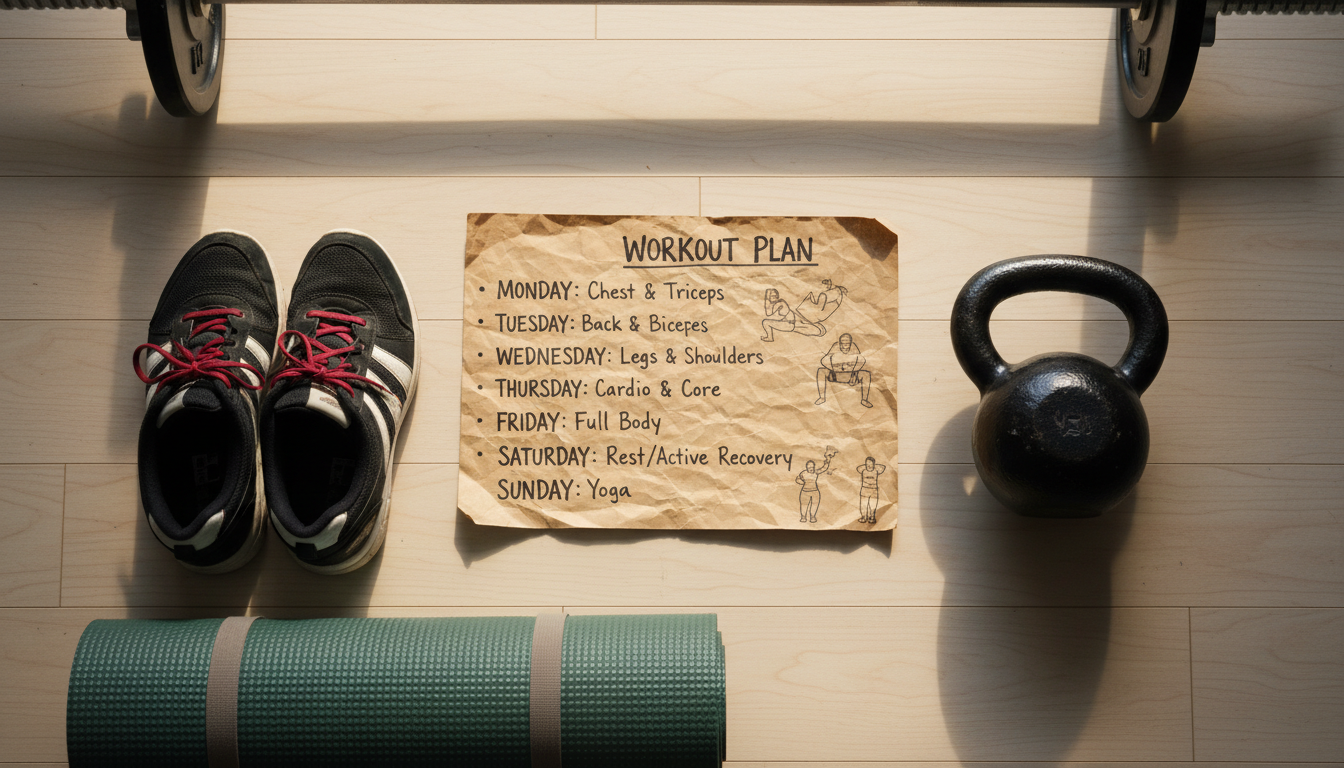
That could look like this:
DayFocusMondayWeightlifting with squats, presses, rows, and core workTuesdayYoga flow or mobility with breathworkWednesdayCrossFit-style workout with rowing, kettlebells, and bodyweight movementsThursdayRest or gentle yogaFridayWeightlifting with deadlifts, lunges, pulls, and carriesSaturdayCrossFit-style partner workout, intervals, or skill workSundayRestorative yoga, walking, or full rest
This is only a sample. A newer athlete might start with three total training days. A more experienced person might train five or six days, but recovery still needs a seat at the table.
The key is to avoid stacking the hardest version of each style back to back. Heavy deadlifts, high-rep box jumps, and deep hamstring stretching may not belong in the same 24-hour window for everyone. Smart programming respects fatigue.
Which style fits best right now
The best starting point depends on the biggest missing piece.
Choose yoga first if stiffness, stress, poor balance, or movement discomfort keeps getting in the way. Yoga can build a better foundation for everything else.
Choose CrossFit first if motivation, conditioning, and variety are the main needs. The class structure can create momentum and expose what to improve next.
Choose weightlifting first if strength is the clear gap. Building muscle and force production often improves confidence quickly and supports nearly every physical goal.
Still, the strongest answer is rarely permanent. A person might focus on strength for 12 weeks, then add more conditioning. Another might use yoga to restore range of motion before returning to heavier lifting. Someone else might enjoy CrossFit year-round while using yoga and strength sessions to stay balanced.
Fitness is not a fixed identity. It is a practice.
The best routine moves in more than one direction
Yoga, CrossFit, and weightlifting each bring something valuable.
Yoga teaches control, breath, mobility, and awareness. CrossFit builds conditioning, variety, skill, and group energy. Weightlifting develops strength, muscle, power, and measurable progress.
Used together, they create a routine that is stronger than any single style alone. Lift to build capacity. Practice yoga to move with more control. Use CrossFit-style training to test fitness under fatigue. Rest enough to absorb the work.
The best workout style is the one that supports the whole body, not just one skill. Train to move well, move often, and keep moving for years.